Premium FRP solutions for facades, interiors and landscapes
Facade arches, columns, stone-finish elevations and decorative features in FRP — light, weatherproof and shaped to the design.
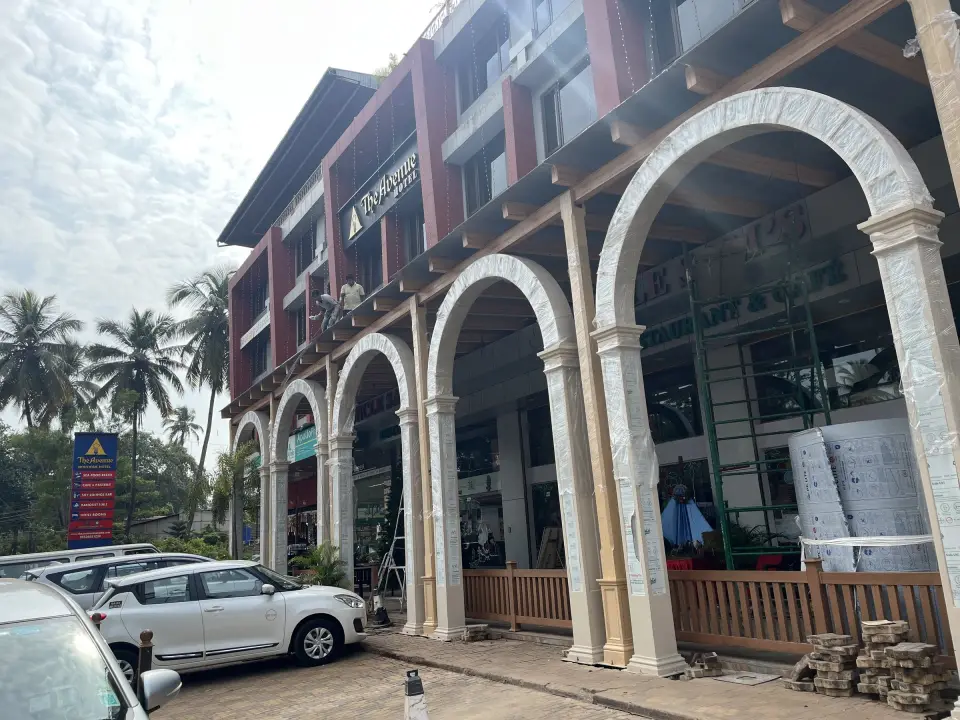
What is FRP?
FRP (fibre-reinforced plastic) is a composite made by bonding layers of glass fibre with resin inside a mould. The fibres carry the load; the resin locks them in shape and keeps out water. The result is a part that is strong, light and can take almost any form or finish.
Benefits of FRP
Why FRP is chosen over stone, concrete and metal for decorative and architectural work.
Lightweight
Much lighter than stone, concrete or metal, so large pieces are easier to transport, lift and fix.
Weather and rust proof
Does not rust or rot. Suited to exteriors, facades and monsoon conditions.
Waterproof
A sealed laminate does not absorb water, which suits planters and exterior elements.
Any shape
Columns, cornices, curves and fine relief detail can be moulded rather than carved.
Any finish
Finished to look like stone, marble or wood, or painted in any colour.
Low maintenance
A smooth gelcoat surface cleans easily and keeps its colour with simple care.
Our FRP work
Photographs from our FRP projects. Select one to see the full set.
-
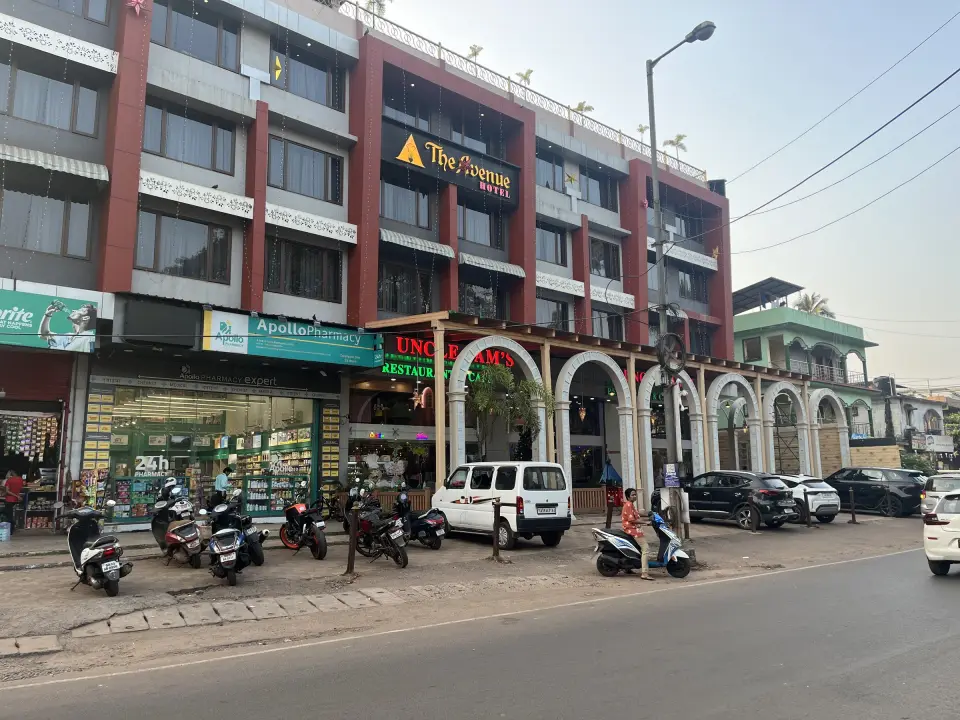
Facade arches and pergolas
A run of arches and a pergola along a hotel and restaurant front.
View photos -
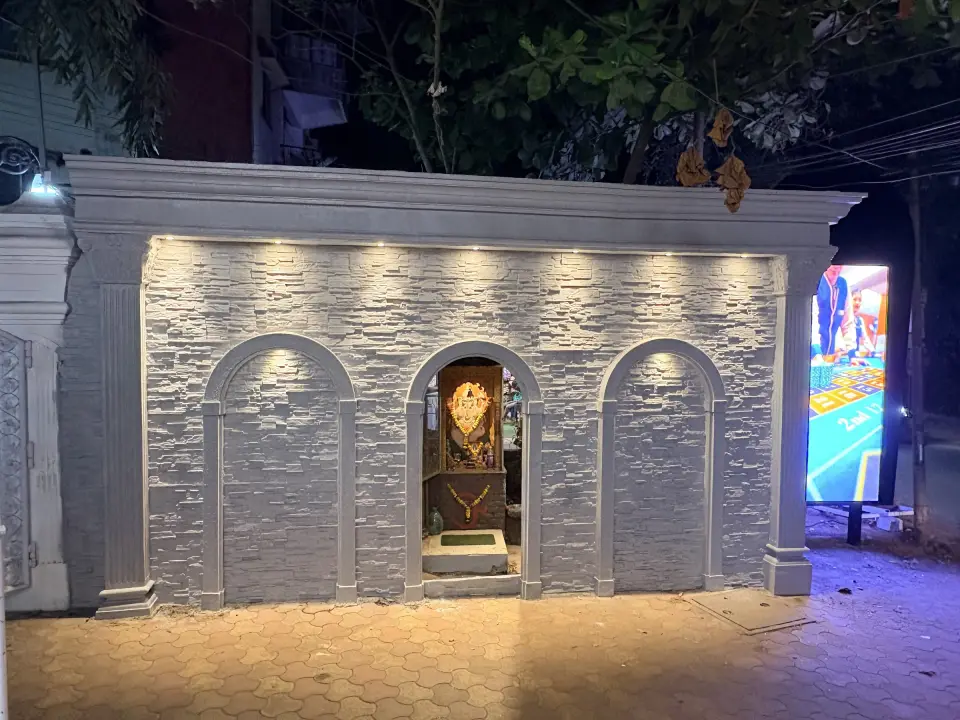
Stone-finish arched facades
Arches, columns and a stone-finish wall for a casino entrance, lit at night.
View photos -
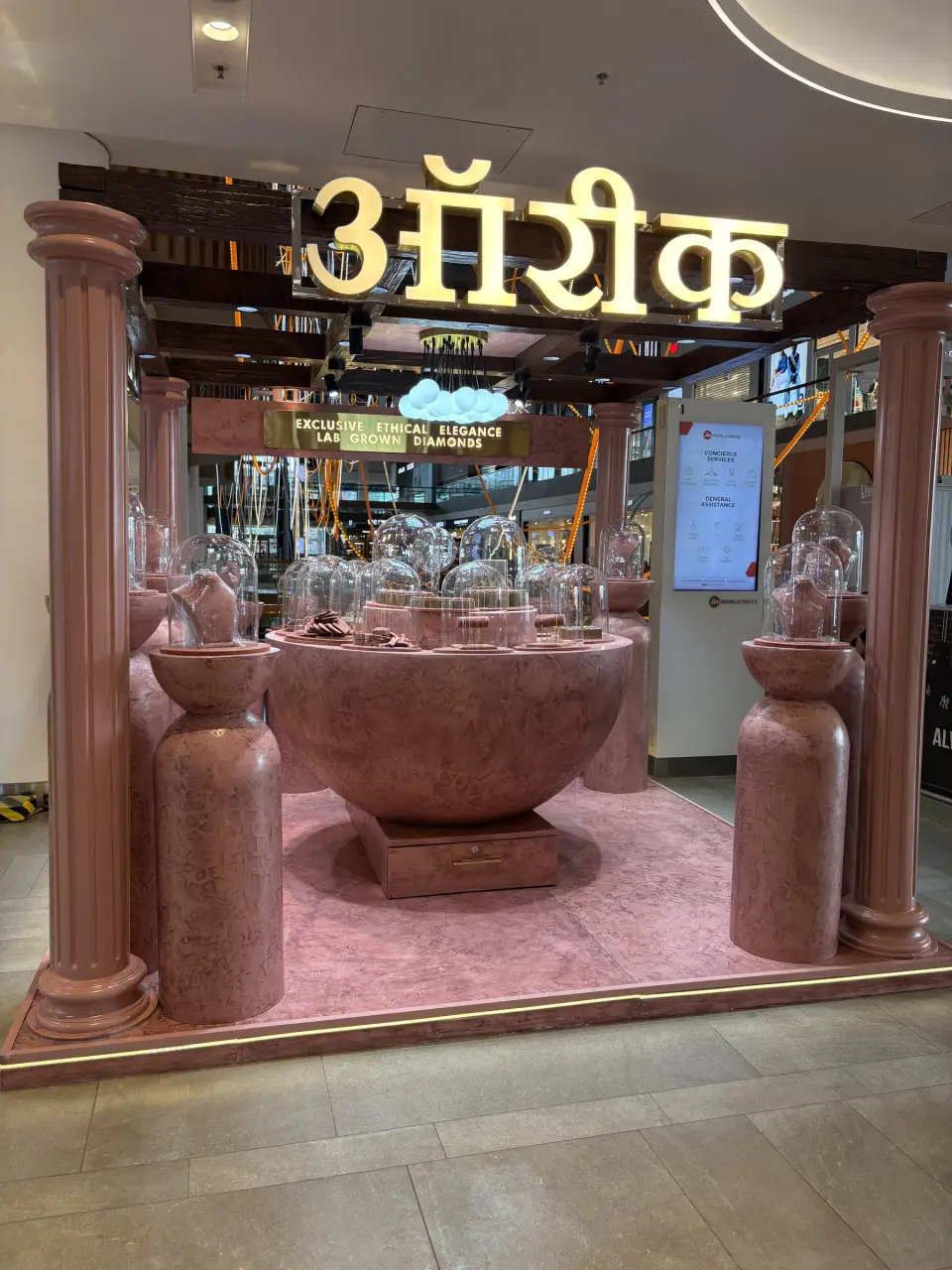
Classical columns
Columns framing a jewellery kiosk inside a mall.
View photos -
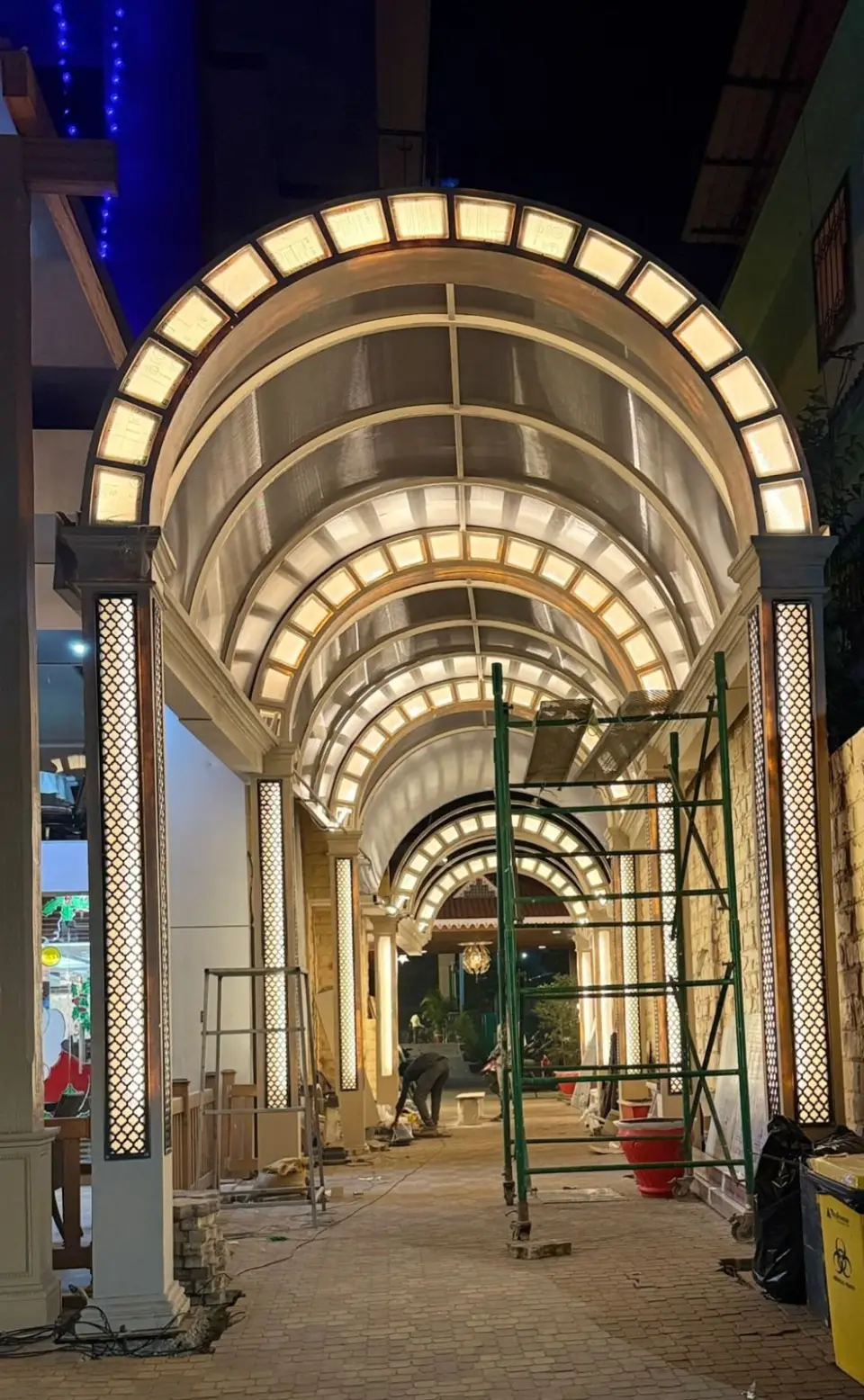
Illuminated arch walkways
A lit arched walkway, photographed during installation.
View photos -
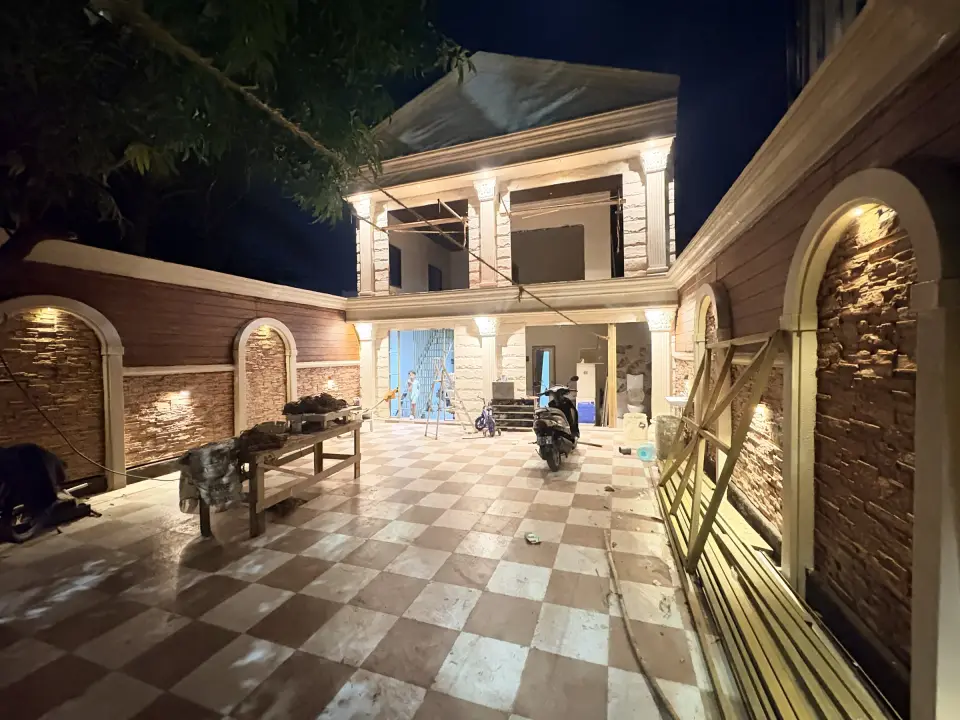
Courtyard arches
Arches and stone cladding around a villa courtyard.
View photos
Where FRP is used
Common applications of the material.
FRP compared with traditional materials
| Property | FRP | Stone or marble | Concrete | Metal |
|---|---|---|---|---|
| Weight | Light | Very heavy | Heavy | Heavy |
| Complex shapes | Moulded in one piece | Carved, costly | Possible, heavy | Fabricated, welded |
| Rust and corrosion | None | None | Can crack or spall | Needs coating |
| Installation | Light lifting | Heavy lifting | Heavy lifting | Welding on site |
| Maintenance | Wipe clean | Sealing, polishing | Repairs, painting | Repainting |
| Finish options | Any colour or texture | Natural only | Limited | Paint or plating |

FRP questions, answered
What is FRP made of?
Glass fibre reinforcement bonded with resin (usually polyester, vinyl-ester or epoxy) and finished with a pigmented gelcoat. The combination gives good strength for very little weight.
Can FRP be used outdoors?
Yes. With a UV-stabilised gelcoat, FRP handles sun and rain without rusting or rotting, which is why it is widely used for facade elements, columns, cornices and planters.
How do I care for FRP?
Wash it occasionally with mild soap and water. Outdoor pieces exposed to strong sun for many years may benefit from a light polish or recoat to refresh the finish.
What finishes can FRP have?
FRP can be finished in a solid colour or to resemble stone, marble or wood.
Is FRP fire resistant?
Standard FRP is combustible, like timber. Fire-retardant resin systems exist for spaces that require them — mention it when you enquire.
How do I request a quote?
Send a sketch, reference photo or drawing with sizes, quantity and site location through the form on this page, by WhatsApp or by email, and our team will get in touch.
Request an FRP quote
Send a sketch, photo or drawing reference with sizes and quantity, and our team will get in touch.
- Call Rajeshwar Sharma+91 97622 58353
- WhatsAppMessage us on WhatsApp
- Emailsales@pedecor.in